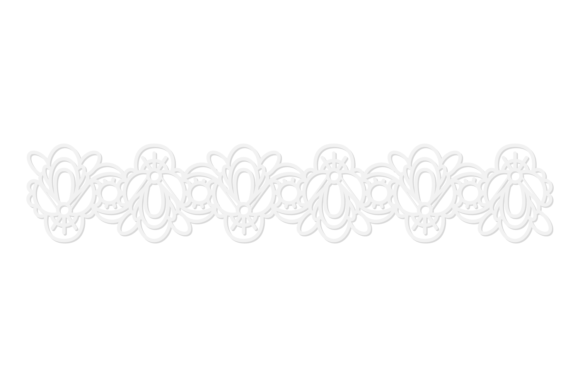
Elevating Design with Horizontal Lace Borders and White Ornate Decor
In the vast landscape of digital and print design, the difference between a good layout and a great one often lies in the details. While bold typography and vibrant imagery grab immediate attention, it is the subtle framing elements that provide structure, elegance, and a sense of completion to a project. Among these essential tools, the Horizontal Lace Border stands out as a timeless choice for creators seeking to add a touch of sophistication without overwhelming the viewer. Specifically, designs featuring a White Ornate Dec—an ornate decorative strip isolated on a white background—offer unparalleled versatility for professionals, business owners, and hobbyists alike.
The Enduring Appeal of Ornate Framing
Ornamentation in design is not merely about decoration; it is about guiding the eye and establishing a visual hierarchy. A Horizontal Lace Border serves as a gentle divider, separating sections of content while maintaining a cohesive flow. Unlike harsh lines or solid blocks of color, lace patterns introduce texture and intricacy. They evoke a sense of tradition, craftsmanship, and luxury, making them ideal for contexts where trust, elegance, and attention to detail are paramount.
The specific appeal of a White Ornate Dec lies in its neutrality and adaptability. Because the design is typically provided as a white element isolated on a white background (often in high-quality formats like EPS or JPG), it acts as a "negative space" cutter. When placed over a colored background, a photograph, or a textured paper, the white lace reveals the background through its intricate cutouts, creating a stunning contrast that feels both modern and classic.
Key Characteristics and File Formats
When selecting digital assets for your projects, understanding the technical specifications is crucial for achieving the best results. The Horizontal Lace Border described here usually comes in two primary formats, each serving a distinct purpose:
- EPS (Encapsulated PostScript): This is a vector-based format, meaning the image is defined by mathematical paths rather than pixels. For designers using software like Adobe Illustrator or CorelDRAW, an EPS file allows the White Ornate Dec to be scaled infinitely without any loss of quality. You can stretch it across a billboard or shrink it for a business card, and the delicate loops of the lace will remain crisp and sharp.
- JPG (Joint Photographic Experts Group): This is a raster format, composed of pixels. While generally less flexible than vectors regarding scaling, high-resolution JPGs are universally compatible. They are perfect for quick integration into word processors, web builders, or social media graphics where vector editing tools are not available. The "isolated on white background" feature ensures that users can easily use blending modes (like "Multiply" or "Screen") in photo editing software to make the white background disappear, leaving only the ornate design.
Practical Applications Across Industries
The utility of a Horizontal Lace Border extends far beyond simple aesthetics. Its application varies significantly depending on the industry and the specific message a creator wishes to convey. Here are several real-world scenarios where this element proves invaluable:
- Wedding and Event Stationery: Perhaps the most traditional use case, these borders are staples in invitation suites. A White Ornate Dec placed at the top and bottom of an invitation card frames the text beautifully, suggesting formality and celebration. It works equally well on menus, programs, and place cards.
- Certificates and Awards: Professional recognition demands a design that conveys authority and prestige. Incorporating a horizontal lace border around the perimeter or as a divider between the recipient's name and the issuing body adds an official, dignified touch to certificates of achievement, diplomas, and awards.
- Branding and Packaging: For businesses in the beauty, wellness, or artisanal food sectors, packaging is a critical touchpoint. A subtle lace pattern printed in foil or embossed onto a box can elevate a product from generic to gourmet. The Horizontal Lace Border can be used to separate branding elements from product descriptions on labels.
- Digital Content and Web Design: In the digital realm, these borders can break up long-form content, such as blog posts or newsletters, providing a visual rest for the reader. When used as a separator between articles on a website, they add a layer of editorial polish that standard horizontal rules (
Evaluating Suitability for Your Project
Before integrating a White Ornate Dec into your workflow, it is essential to evaluate whether it aligns with your project's goals. While versatile, ornate designs are not a one-size-fits-all solution. Consider the following factors:
Tone and Audience: Does your brand or project voice lean towards the traditional, romantic, or luxurious? If your audience expects minimalist, ultra-modern, or industrial aesthetics, a heavy lace border might feel out of place. However, even in modern designs, a very fine, delicate lace can act as a surprising element of contrast if used sparingly.
Background Complexity: Since the Horizontal Lace Border relies on contrast to be visible, the background matters immensely. If you are using the white ornate strip over a busy photograph or a dark, textured pattern, ensure there is enough distinction. Sometimes, adding a slight drop shadow or placing the lace over a solid color block within the image can enhance visibility.
Scale and Resolution: Always check the resolution of the JPG or the scalability of the EPS. If the lace details are too fine for the intended output size (e.g., printing on low-quality newsprint), the intricate parts may blur together, turning the elegant design into a muddy line. For small-scale digital use, simplify the view or choose a version of the border with slightly thicker lines.
Maximizing Value Through Versatility
One of the greatest strengths of the Horizontal Lace Border is its ability to be manipulated creatively. Because it is often provided as an isolated element, designers are not limited to using it in pure white. By changing the color overlay in design software, the same White Ornate Dec can become gold, silver, navy, or pastel pink to match any brand palette. This transforms a single asset into a multifaceted tool that can serve dozens of different projects.
Furthermore, these borders can be mirrored, rotated, or tiled. A horizontal strip can be turned vertically to create side borders for a letterhead. Two strips can be joined to create a corner flourish. The possibilities are limited only by the creator's imagination. For those who do not have access to professional design software, many online editors now support PNGs with transparency (converted from the original white-background files), allowing easy drag-and-drop customization.
Final Thoughts on Design Integration
In an era where digital content is consumed at lightning speed, taking a moment to refine the presentation of your materials can set you apart. The Horizontal Lace Border offers a bridge between the old world of printed elegance and the new world of digital flexibility. Whether you are a business owner designing your first flyer, a professional creating a high-stakes presentation, or a creator crafting a personal portfolio, incorporating a White Ornate Dec can instill a sense of care and quality.
Remember, the goal of using such decorative elements is never to distract, but to enhance. When chosen with intention and applied with precision, a horizontal lace border does more than fill empty space; it tells a story of refinement and attention to detail. As you explore the various EPS and JPG options available, consider how this simple yet powerful tool can transform the ordinary into the extraordinary, giving your work the polished finish it deserves.