Integrating Watercolor Dragonfly Floral Clipart into Professional Creative Workflows
In the landscape of modern digital design and small business entrepreneurship, the efficiency of asset integration often dictates the success of a project. For creators ranging from independent card makers to sublimation business owners, the selection of high-quality visual elements is not merely an aesthetic choice but a strategic operational decision. Watercolor Dragonfly Floral Clipart represents a specific category of digital assets that bridges the gap between artistic expression and commercial viability. When incorporated correctly, these assets streamline the production process for physical goods, marketing materials, and personalized decor, allowing professionals to focus on execution rather than creation from scratch.
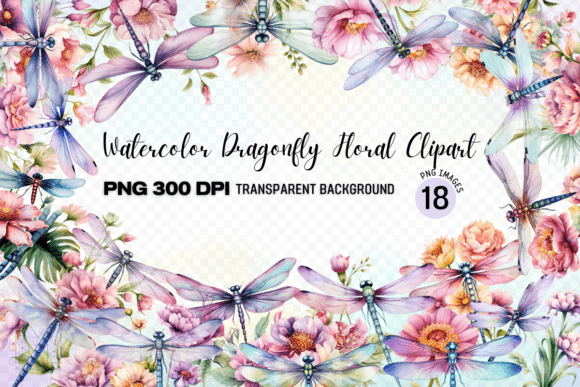
The core value of this decorative collection lies in its technical specifications and versatility. A standard bundle typically includes 18 PNG digital images, each rendered at 3600 × 3600 pixels with a resolution of 300 DPI. These metrics are critical for workflow planning. The 300 DPI standard ensures that the images maintain crisp edges and vibrant color fidelity when printed, whether on a home inkjet printer or through a commercial print shop. Furthermore, the transparent background inherent in PNG formats eliminates the need for time-consuming manual masking or erasing, a step that often bottlenecks production timelines. By utilizing pre-isolated elements, designers can immediately place dragonflies and floral accents onto various substrates without worrying about white halos or incompatible backgrounds.
Strategic Implementation in Sublimation and Product Design
One of the most robust use cases for Watercolor Dragonfly Floral Clipart is within the sublimation printing workflow. Sublimation requires high-resolution source files to ensure that the dye transfer process results in sharp, professional-grade imagery on items like mugs, pillows, wall clocks, and posters. The process begins long before the heat press is engaged; it starts with file preparation. Upon purchasing an instant download bundle, the immediate task is organization. Users must unzip the downloaded files using a computer and store them in a structured directory system. This preparatory step is vital for maintaining an efficient workspace, ensuring that assets are readily accessible during high-volume production runs.
Once organized, the integration phase involves importing these PNGs into a design editing program capable of handling layers, such as Adobe Photoshop, Illustrator, Canva, or Affinity Designer. Because the files support standard formats like JPG and PNG, they are compatible with nearly all industry-standard software. In a typical sublimation workflow, the designer places the dragonfly and floral elements onto a template sized specifically for the target product—for instance, a 11oz mug wrap or a 12x12 inch pillow cover. The high resolution of 3600 pixels allows for significant scaling; the image can be enlarged to fill a large poster or reduced for a delicate greeting card without losing detail. This scalability provides flexibility, allowing a single asset bundle to serve multiple product lines simultaneously.
Quality control is a non-negotiable aspect of this process. Before sending a design to print, it is essential to preview the composition at 100% zoom to verify that the watercolor textures render correctly and that no pixelation occurs. The watercolor style offers a unique advantage here; its soft, organic edges tend to be more forgiving than hard-vector graphics if minor scaling adjustments are made, though adhering to the native resolution is always best practice. After finalizing the design, the file is exported in the format required by the specific printer or sublimation software, completing the digital phase of the workflow.
Enhancing Card Making and Paper Crafts
Beyond sublimation, this decorative collection serves as a foundational resource for card making and paper crafts. For hobbyists and small business owners selling handmade stationery, the ability to print high-quality elements at home significantly reduces overhead costs. The workflow here shifts from digital manipulation to physical assembly. After printing the dragonfly and floral designs on cardstock or specialty photo paper, the creator cuts out the individual elements. Because the background is already transparent in the digital file, the printed output requires minimal trimming around the subject, preserving the delicate watercolor edges that define the style.
These printed elements can then be integrated into mixed-media projects. They function effectively as focal points on handmade greeting cards, scrapbook pages, or gift tags. The thematic combination of insects and flora resonates well with spring and summer collections, wedding invitations, and nature-themed events. By having a cohesive set of 18 images, creators can maintain visual consistency across a entire product line. For example, a series of thank-you cards can utilize different variations from the same bundle, ensuring that while each card is unique, they all share a unified brand aesthetic. This consistency is crucial for building brand recognition and perceived value among customers.
Workflow Optimization and Asset Management
To maximize the return on investment for digital assets like Watercolor Dragonfly Floral Clipart, effective asset management is essential. Professionals should treat these downloads as long-term resources rather than one-off purchases. This involves creating a backup system immediately after download. Since the product is an instant download with no physical shipment, the responsibility for data preservation lies entirely with the user. Storing copies on both a local drive and a cloud storage solution prevents data loss due to hardware failure.
Furthermore, understanding the licensing constraints is a critical part of the professional workflow. The standard usage rights for such bundles typically allow for unlimited personal and commercial projects involving the printed or applied image, but strictly prohibit the resale of the original digital files. This means a user cannot upload the raw PNGs to stock photo sites or sell them as digital clipart on marketplaces. However, once these images are incorporated into a finished product—such as a printed mug, a framed poster, or a physical greeting card—that final product can be sold freely. Adhering to these guidelines protects the creator from legal issues and respects the intellectual property of the original artist.
Efficiency in the creative process also comes from anticipating future needs. When planning a seasonal marketing campaign, a business owner might review their library of available clipart to see if existing assets like dragonfly florals can be repurposed. Perhaps a design originally created for a wall clock can be adapted for a tote bag or a laptop sleeve with minimal adjustment. This cross-platform adaptability reduces the time spent searching for new assets and accelerates the time-to-market for new products.
Technical Considerations for Optimal Results
Successful implementation relies heavily on the compatibility between the digital asset and the output method. While the 300 DPI resolution is ideal for print, users working primarily in digital media, such as social media graphics or website banners, should be aware that these files may be larger than necessary. In such cases, resizing the images to 72 DPI or appropriate pixel dimensions for web use can improve page load speeds and workflow efficiency without sacrificing visual quality on screens. Conversely, for large-format printing like posters, the 3600-pixel dimension provides ample room for high-quality output up to approximately 12 inches at full resolution, which is sufficient for many standard decor items.
Color management is another factor to consider. Watercolor art often features subtle gradients and blended hues. To ensure the printed output matches the on-screen preview, creators should calibrate their monitors and use ICC profiles specific to their printers and paper types. This step minimizes the risk of color shifting, ensuring that the soft blues and greens of the dragonfly wings and the vibrant tones of the flowers appear exactly as intended. Taking the time to perform test prints on the actual substrate—whether it is ceramic coating for sublimation or matte cardstock for crafting—can save significant material costs and time in the long run.
In conclusion, integrating Watercolor Dragonfly Floral Clipart into a creative or business workflow is a process that rewards preparation and technical awareness. From the initial download and organization to the final application on physical products, every step offers an opportunity to enhance efficiency and quality. By leveraging the high resolution, transparent backgrounds, and versatile themes of these assets, professionals can produce standout designs for cards, mugs, pillows, and more. Whether the goal is to launch a new sublimation product line or to elevate personal crafting projects, these digital tools provide a reliable foundation for creative execution. With proper management and adherence to usage guidelines, this decorative collection becomes a valuable component of a sustainable and productive creative enterprise.