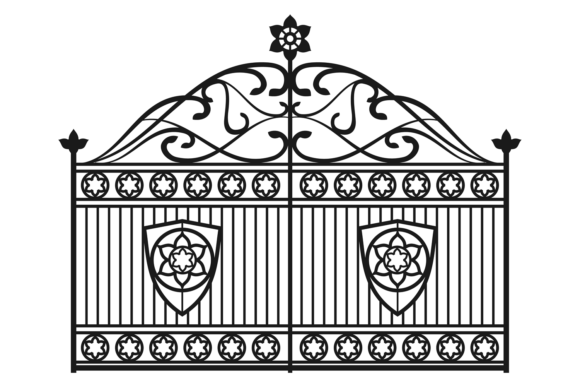
Understanding the Wrought Gate Black Silhouette: A Guide to Decorative Iron Design
The visual impact of a property often hinges on its entryway, where the interplay of light, shadow, and structure creates a lasting first impression. In the realm of architectural design and digital illustration, the wrought gate black silhouette has emerged as a distinct and versatile element. This style captures the intricate craftsmanship of traditional decorative ironwork while stripping away color and texture to focus purely on form and outline. Whether utilized in physical landscaping projects or as a digital asset for graphic design, understanding the nuances of this aesthetic is crucial for making informed decisions about its application.
At its core, a wrought gate black silhouette represents the essence of decorative iron fencing reduced to its most fundamental visual components. It mimics the appearance of forged metal—characterized by scrolls, spears, finials, and organic curves—but presents them as solid black shapes against a contrasting background, typically white or transparent. This approach is not merely a stylistic choice; it serves functional purposes in both physical installation and digital media. For homeowners and designers, it offers a timeless look that emphasizes security and elegance without the visual noise of complex color palettes. For digital creators, it provides a clean, scalable vector format (such as EPS or SVG) that can be easily integrated into various layouts without losing resolution.
Distinguishing Features and Aesthetic Appeal
What sets the wrought gate black silhouette apart from other fencing styles or graphic representations is its reliance on negative space. Unlike chain-link fences, which prioritize visibility through a grid pattern, or wooden gates, which offer solidity and grain texture, silhouetted ironwork creates a dynamic relationship between the object and its surroundings. The "black" aspect is critical; it provides high contrast, ensuring that the detailed scrollwork remains legible even from a distance or when scaled down in a document.
In physical applications, this style often involves powder-coated steel or genuine wrought iron painted in matte or satin black. The lack of ornate gold leafing or multi-colored accents forces the viewer to appreciate the geometry of the design. The curves of a rococo scroll or the sharpness of a fleur-de-lis become the primary focal points. This minimalism aligns well with modern architectural trends that favor clean lines, yet it retains the historical gravitas of classical European estate designs.
From a digital perspective, the availability of these designs in formats like transparent PNG, JPG, and SVG expands their utility. A vector-based SVG file allows a designer to resize a gate illustration from a small icon to a large banner without pixelation, maintaining the crisp edges essential for a professional silhouette. This flexibility makes the wrought gate black silhouette a preferred resource for branding materials, website headers, and print media where a symbol of security or exclusivity is needed.
Comparative Analysis: Silhouette vs. Full-Color and Other Materials
When evaluating options for fencing or design assets, it is helpful to compare the silhouette approach against full-color renderings and alternative materials. Each option carries specific tradeoffs regarding cost, maintenance, and visual weight.
- Visual Clarity: A full-color photograph of an iron gate captures rust patinas, reflections, and environmental context. While realistic, this can sometimes clutter a design or distract from the main message. The wrought gate black silhouette removes these variables, offering a universal symbol that is instantly recognizable regardless of the background.
- Maintenance and Longevity: In physical terms, black iron fences require periodic maintenance to prevent rust, although modern powder coatings have significantly improved durability. Compared to vinyl or aluminum fencing, which may come in various colors but lack the same depth of custom scrollwork, true iron silhouettes offer a bespoke feel. However, vinyl offers a "set it and forget it" advantage that iron cannot match.
- Design Flexibility: Digital users often choose between raster images (JPG/PNG) and vectors (EPS/SVG). While a high-resolution JPG of a gate silhouette is sufficient for web use, it lacks the editability of an EPS or SVG file. Professionals researching resources should prioritize vector formats if they intend to modify the gate's proportions or integrate it into complex illustrations.
Furthermore, when comparing this style to other fence types, such as privacy wood panels or chain-link, the silhouette gate occupies a unique middle ground. It provides a psychological barrier and a clear boundary marker without completely obstructing the view. This "see-through" quality is vital for properties where curb appeal and visibility are prioritized over total seclusion.
Practical Applications and Best-Fit Scenarios
Determining whether a wrought gate black silhouette is the right choice depends heavily on the intended context. For residential homeowners, this style is ideal for front yard entrances where the goal is to enhance curb appeal without creating a fortress-like atmosphere. It complements brick, stone, and stucco facades particularly well, as the black iron provides a sharp contrast to lighter masonry.
In the commercial sector, these silhouettes are frequently used in branding for security firms, real estate agencies, and luxury hotels. The imagery conveys stability, tradition, and protection. When selecting digital assets for these purposes, opting for an isolated on white background version ensures easy integration into existing brand guidelines. If the background of the final design is non-white, a transparent PNG or editable SVG is necessary to avoid unsightly white boxes around the gate.
Architects and landscape designers also utilize these silhouettes during the conceptual phase. Before committing to the expense of custom fabrication, a black silhouette rendering helps clients visualize the rhythm and scale of the proposed fence. It allows for rapid iteration of different patterns—comparing a simple spear-top design against an intricate scroll pattern—without the distraction of material textures.
Limitations and Decision Factors
Despite its versatility, the wrought gate black silhouette is not a one-size-fits-all solution. There are specific scenarios where this approach may fall short. For instance, in environments with low lighting, a solid black fence can become visually invisible at night unless accompanied by strategic uplighting. Homeowners concerned with nighttime security perception might need to consider integrating lighting fixtures directly into the gate design or choosing a lighter finish that reflects ambient light.
Additionally, for digital users, the complexity of the silhouette matters. Highly detailed vector files with thousands of anchor points can slow down web page loading times if not optimized. When downloading resources, it is prudent to check the file size and complexity. A simplified silhouette may be more effective for mobile interfaces, while a highly detailed EPS file is better suited for large-format printing.
Cost is another significant factor. Genuine wrought iron is expensive and heavy, requiring robust foundation work. Alternatives like aluminum or steel that mimic the decorative look offer a more budget-friendly route while maintaining the silhouette aesthetic. However, purists may argue that the weight and feel of true iron contribute to the perceived value of the property, a nuance that cheaper alternatives cannot fully replicate.
Making an Informed Choice
Selecting the appropriate variation of a wrought gate black silhouette requires balancing aesthetic goals with practical constraints. If the priority is ease of use in graphic design, investing in a high-quality SVG pack that includes multiple variations (open, closed, partial sections) provides the most long-term value. Ensure the files are truly isolated and free of background artifacts to maintain professionalism.
For physical installations, the decision lies between authentic craftsmanship and modern simulation. If the budget allows and the historical integrity of the building is paramount, custom-forged iron is the superior choice. Conversely, for modern developments where consistency and low maintenance are key, pre-fabricated aluminum sections with a black powder coat offer a convincing silhouette effect with less upkeep.
Ultimately, the power of the wrought gate black silhouette lies in its ability to communicate strength and elegance simultaneously. By understanding the differences in material, format, and application, individuals can leverage this classic design element effectively. Whether framing a garden entrance or anchoring a corporate logo, the stark beauty of black iron continues to serve as a definitive standard for decorative boundaries.