Evaluating the Versatility of One Continuous Line Design of Smoothie Assets
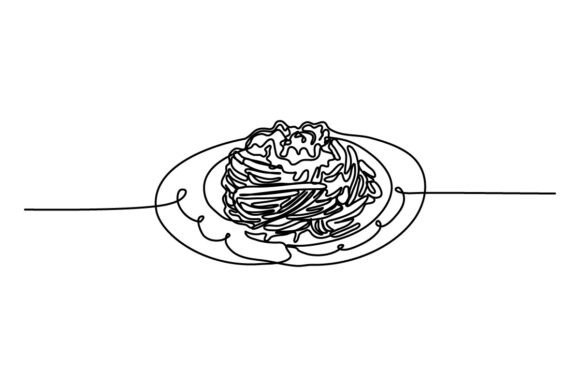
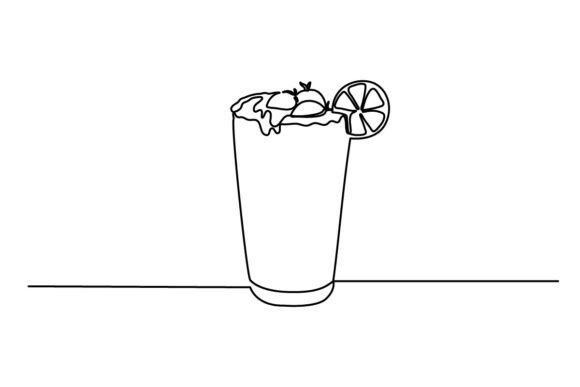
In the current landscape of digital branding and content creation, visual efficiency often dictates engagement. Designers and business owners alike are constantly searching for assets that convey complex ideas with minimal visual noise. The One Continuous Line Design of Smoothie represents a specific stylistic approach within this broader trend of minimalism. Unlike traditional illustrations that rely on shading, gradients, or multiple disconnected strokes to define form, this style utilizes a single, unbroken vector path to outline the subject. When applied to a smoothie in a glass, the result is a clean, modern graphic that balances artistic flair with functional clarity.
For professionals managing tight deadlines or maintaining strict brand guidelines, understanding the utility of such assets is crucial. This analysis explores the characteristics, practical applications, and technical specifications of these continuous line designs, specifically focusing on files available in EPS, SVG, and JPG formats against a white background with decorative elements.
The Aesthetic and Functional Appeal of Single-Line Art
The primary characteristic of a one continuous line design of smoothie in a glass is its fluidity. Because the image is constructed from a single stroke, it inherently suggests motion and freshness—qualities that align perfectly with the product being depicted. Smoothies are associated with health, vitality, and quick consumption; a static, heavy illustration might contradict these associations. The continuous line mimics the pouring action of liquid or the blending process itself, creating a subconscious connection between the art style and the product's nature.
From a design perspective, the removal of extraneous details forces the viewer to focus on the silhouette and the essential components of the object. Decorative elements drawn on a white background further enhance this by providing context without clutter. These decorations might include abstract leaves, fruit slices, or splash motifs, all rendered in the same single-line technique. This consistency ensures that the graphic remains cohesive, preventing the "busy" look that often plagues marketing materials trying to say too much at once.
Technical Formats and Workflow Integration
The value of any digital asset is heavily dependent on its file formats. For the serious hobbyist or the professional agency, the inclusion of EPS, SVG, and JPG files addresses the full spectrum of production needs.
- SVG (Scalable Vector Graphics): This is arguably the most critical format for modern web and app development. An SVG version of the smoothie design ensures that the image remains crisp on any screen resolution, from mobile phones to 4K monitors. Furthermore, because it is code-based, developers can manipulate the stroke color, width, and animation properties via CSS. This allows a brand to change the line color to match a seasonal campaign without needing a designer to edit the source file.
- EPS (Encapsulated PostScript): For print professionals, the EPS file is the industry standard. It guarantees compatibility with legacy and high-end printing systems. Whether the design is being scaled up for a storefront window decal or down for a business card, the vector data ensures no loss of quality. This format is essential for packaging design, where precision is non-negotiable.
- JPG (Joint Photographic Experts Group): While vectors are superior for editing, the JPG serves a vital role in rapid deployment. For bloggers, social media managers, or educators creating slide decks, a high-resolution JPG with a white background offers an immediate "drag-and-drop" solution. It eliminates the need for software like Adobe Illustrator for users who simply need a clean image for a blog post or Instagram story.
Practical Applications Across Industries
The versatility of the one continuous line design of smoothie extends far beyond simple decoration. Its neutral yet stylish appearance makes it adaptable for various sectors.
Health and Wellness Brands: Gyms, nutritionists, and supplement companies often struggle to find imagery that feels energetic but not aggressive. This art style strikes that balance. It can be used on website headers, workout guides, or meal plan PDFs to visually break up text while reinforcing the theme of natural health.
Cafés and Juice Bars: For small business owners, menu design is a constant challenge. Using continuous line art for menu icons or wall murals creates a sophisticated, boutique atmosphere. It suggests artisanal quality rather than mass production. The decorative elements can be customized or selected to match specific ingredients, such as adding a continuous-line strawberry or banana to the composition.
Content Creators and Educators: Bloggers writing about healthy lifestyles or educators teaching nutrition can use these graphics to illustrate concepts without distracting from the core message. The white background ensures that the images integrate seamlessly into documents and presentations, requiring no time-consuming background removal.
Quality Assessment and Usability Considerations
When evaluating a specific asset pack featuring a one continuous line design of smoothie in a glass, several factors determine its long-term value. First is the complexity of the line work. If the line is too simple, the object may become unrecognizable; if it is too complex, it loses the elegance of the minimalist style. High-quality examples strike a balance where the glass, the liquid level, the straw, and the garnish are distinct yet unified.
Consistency is another metric. In a set containing decorative elements, do the lines share the same weight and curvature logic? Inconsistent stroke widths can make a design look amateurish when elements are combined. Professionals should look for assets where the decorative flora or fruit accents feel like they belong to the same visual family as the main smoothie graphic.
Furthermore, the "white background" specification is a double-edged sword that requires attention. While convenient for immediate use in documents, it can be a limitation for dark-mode websites or colored packaging. However, because the source files include vector formats (EPS/SVG), this limitation is easily overcome by opening the file in vector software and deleting the background rectangle. Users relying solely on the JPG must be aware of this constraint and plan their layouts accordingly.
Strategic Value for Marketers and Entrepreneurs
In an era where attention spans are short, the ability to communicate quickly is a competitive advantage. The One Continuous Line Design of Smoothie aids in this by reducing cognitive load. Viewers process simple lines faster than detailed photographs or complex illustrations. For marketers, this means the core message—"fresh," "healthy," "natural"—is transmitted almost instantly.
Moreover, these assets offer a cost-effective alternative to custom photography. Stock photos of smoothies can look generic or staged. A custom illustration style, even when purchased as a pre-made asset, provides a unique brand fingerprint. By adopting this specific aesthetic across all touchpoints—from the website favicon to the packaging label—a business builds a recognizable visual identity.
It is also worth noting the scalability of this approach for product lines. If a business expands from smoothies to juices or salads, the continuous line style can be easily extended to those products, maintaining brand consistency. The modular nature of the decorative elements allows for endless variations without needing to commission entirely new artworks.
Limitations and Final Recommendations
While highly effective, this design style is not a universal solution. It may lack the appetizing realism required for certain types of food advertising where texture and color saturation are the primary selling points. A photograph might better convey the creamy texture of a mango smoothie than a line drawing. Therefore, these assets are best used as complementary elements—icons, section dividers, or background patterns—rather than the sole hero image in a conversion-focused ad campaign.
Additionally, users without vector editing skills may find the EPS and SVG files intimidating. For these individuals, the utility of the asset relies entirely on the provided JPGs. It is recommended that buyers verify the resolution of the included JPGs to ensure they meet their specific print or display requirements before purchase.
Ultimately, the one continuous line design of smoothie in a glass is a robust tool for the modern creator. It bridges the gap between artistic expression and commercial utility. By offering a blend of simplicity, scalability, and stylistic coherence, it serves as a reliable foundation for branding projects that aim to appear fresh, modern, and professional. Whether utilized by a freelance designer building a portfolio or a startup launching its first product line, the strategic application of these vector assets can significantly elevate the visual quality of any project.